
Suchergebnisse für "0 OR 96 OR oled OR display OR blue OR i2c OR 4 OR pin"
-
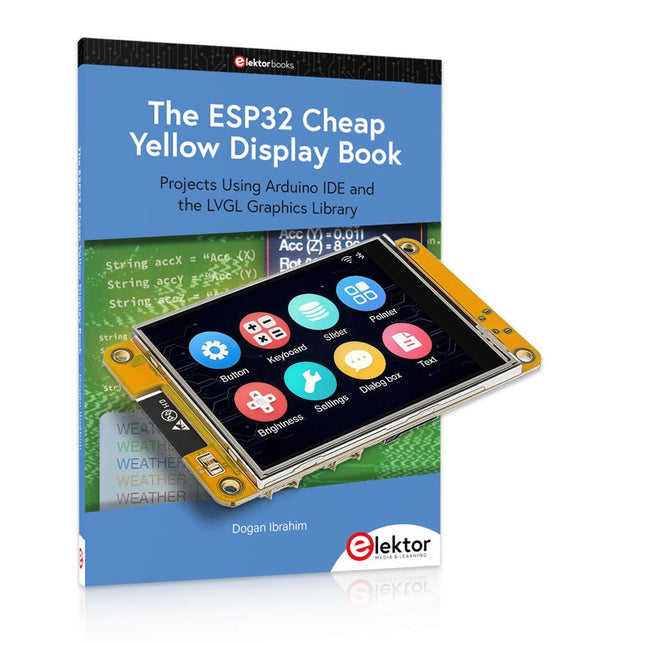
Elektor Bundles The ESP32 Cheap Yellow Display Bundle
Über 40 vollständig getestete ESP32-Projekte mit Arduino IDE und der LVGL-Grafikbibliothek Dieses Bundle enthält das ESP32 Cheap Yellow Display (CYD) – ein kompaktes Entwicklungsboard, das einen Standard-ESP32-Mikrocontroller mit einem 320 x 240 Pixel großen TFT-Farbdisplay kombiniert. Das Board verfügt außerdem über mehrere Anschlüsse für GPIO, serielle Kommunikation (TX/RX), Strom und Masse. Das integrierte Display ist ein großer Vorteil und ermöglicht die Erstellung komplexer, grafikbasierter Projekte ohne externe LCDs oder Displays. Das Begleitbuch stellt die Hardware und die integrierten Anschlüsse des CYD-Boards detailliert vor. Es bietet eine Reihe von Projekten für Anfänger und Fortgeschrittene, die mit der beliebten Arduino IDE 2.0 entwickelt wurden. Sowohl grundlegende Grafikfunktionen als auch die leistungsstarke LVGL-Grafikbibliothek werden behandelt, und praktische Projekte veranschaulichen jeden Ansatz. Alle enthaltenen Projekte wurden vollständig getestet und sind sofort einsatzbereit. Das Buch enthält Blockdiagramme, Schaltpläne, vollständige Codelisten und Schritt-für-Schritt-Erklärungen. Mit der LVGL-Bibliothek können Leser moderne, vollfarbige grafische Benutzeroberflächen mit Widgets wie Schaltflächen, Beschriftungen, Schiebereglern, Kalendern, Tastaturen, Diagrammen, Tabellen, Menüs, Animationen und mehr erstellen. ESP32 Cheap Yellow Display Board Dieses Entwicklungsboard (auch bekannt als "Cheap Yellow Display") wird vom ESP-WROOM-32 angetrieben, einem Dual-Core-MCU mit integrierten Wi-Fi- und Bluetooth-Funktionen. Es arbeitet mit einer Hauptfrequenz von bis zu 240 MHz, mit 520 KB SRAM, 448 KB ROM und einem 4 MB Flash-Speicher. Das Board verfügt über ein 2,8" Display mit einer Auflösung von 240x320 und Resistive Touch. Darüber hinaus enthält die Platine einen Steuerkreis für die Hintergrundbeleuchtung, einen Schaltkreis für die Berührungssteuerung, einen Schaltkreis für die Lautsprecheransteuerung, einen lichtempfindlichen Schaltkreis und einen RGB-LED-Steuerschaltkreis. Es bietet außerdem einen TF-Kartensteckplatz, eine serielle Schnittstelle, eine DHT11-Schnittstelle für Temperatur- und Feuchtigkeitssensoren und zusätzliche E/A-Anschlüsse. Das Modul unterstützt die Entwicklung in Arduino IDE, ESP-IDE, MicroPython und Mixly. Anwendungen Bildübertragung für Smart Home-Gerät Drahtlose Überwachung Intelligente Landwirtschaft QR-Funkerkennung Signal des drahtlosen Positionierungssystems Und andere IoT-Anwendungen Technische Daten Mikrocontroller ESP-WROOM-32 (Dual-Core-MCU mit integriertem WLAN und Bluetooth) Frequenz Bis zu 240 MHz (Rechenleistung bis zu 600 DMIPS) SRAM 520 KB ROM 448 KB Flash 4 MB Betriebsspannung 5 V Stromverbrauch ca. 115 mA Display 2,8" TFT-Farbbildschirm (240 x 320) Touch Resistive Touch Treiberchip ILI9341 Abmessungen 50 x 86 mm Gewicht 50 g Downloads GitHub Dieses Bundle enthält: The ESP32 Cheap Yellow Display Book (Einzelpreis: 35 €) ESP32 Cheap Yellow Display Board (Einzelpreis: 25 €) 1x ESP32 Dev-Board mit 2,8" Display und Acrylgehäuse 1x Touch-Stift 1x Verbindungskabel 1x USB-Kabel
€ 59,95€ 49,95Bestpreis
-
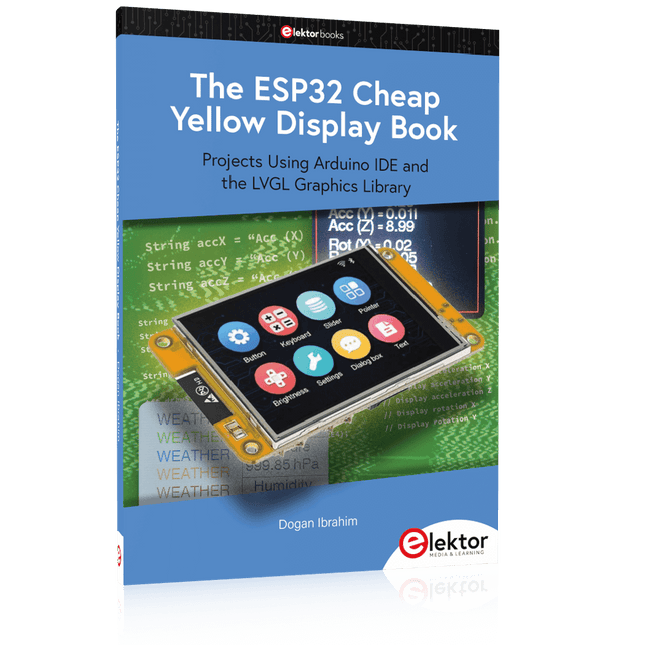
Elektor Publishing The ESP32 Cheap Yellow Display Book
Projects Using Arduino IDE and the LVGL Graphics Library The ESP32 is probably one of the most popular microcontrollers used by many people, including students, hobbyists, and professional engineers. Its low cost, coupled with rich features makes it a popular device to use in many projects. Recently, a board called the ESP32 Cheap Yellow Display (CYD for short) is available from its manufacturers. The board includes a standard ESP32 microcontroller together with a 320x240 pixel TFT display. Additionally, the board provides several connectors for interfaces such as GPIO, serial port (TX/RX), power and Ground. The inclusion of a TFT display is a real advantage as it enables users to design complex graphics-based projects without resorting to an external LCD or graphics displays. The book describes the basic hardware of the ESP32 CYD board and provides details of its on-board connectors. Many basic, simple, and intermediate-level projects are given in the book based on the ESP32 CYD, using the highly popular Arduino IDE 2.0 integrated development environment. The use of both the basic graphics functions and the use of the popular LVGL graphics library are discussed in the book and projects are given that use both types of approaches. All the projects given in the book have been tested and are working. The block diagram, circuit diagram, and the complete program listings and program descriptions of all the projects are given with explanations. Readers can use the LVGL graphics library to design highly popular eye-catching full-color graphics projects using widgets such as buttons, labels, calendars, keypads, keyboards, message boxes, spinboxes, sliders, charts, tables, menus, bars, switches, drop-down lists, animations, and many more widgets.
€ 34,95
Mitglieder: € 31,46
-

Elektor Digital The ESP32 Cheap Yellow Display Book (PDF)
Projects Using Arduino IDE and the LVGL Graphics Library The ESP32 is probably one of the most popular microcontrollers used by many people, including students, hobbyists, and professional engineers. Its low cost, coupled with rich features makes it a popular device to use in many projects. Recently, a board called the ESP32 Cheap Yellow Display (CYD for short) is available from its manufacturers. The board includes a standard ESP32 microcontroller together with a 320x240 pixel TFT display. Additionally, the board provides several connectors for interfaces such as GPIO, serial port (TX/RX), power and Ground. The inclusion of a TFT display is a real advantage as it enables users to design complex graphics-based projects without resorting to an external LCD or graphics displays. The book describes the basic hardware of the ESP32 CYD board and provides details of its on-board connectors. Many basic, simple, and intermediate-level projects are given in the book based on the ESP32 CYD, using the highly popular Arduino IDE 2.0 integrated development environment. The use of both the basic graphics functions and the use of the popular LVGL graphics library are discussed in the book and projects are given that use both types of approaches. All the projects given in the book have been tested and are working. The block diagram, circuit diagram, and the complete program listings and program descriptions of all the projects are given with explanations. Readers can use the LVGL graphics library to design highly popular eye-catching full-color graphics projects using widgets such as buttons, labels, calendars, keypads, keyboards, message boxes, spinboxes, sliders, charts, tables, menus, bars, switches, drop-down lists, animations, and many more widgets.
€ 29,95
Mitglieder: € 26,96
-

Elektor Digital Universal Display Book for PIC Microcontrollers (E-book)
The newcomer to Microchip’s PIC microcontrollers invariably gets an LED to flash as their first attempt to master this technology. You can use just a simple LED indicator in order to show that your initial attempt is working, which will give you confidence to move forward. This is how the book begins — simple programs to flash LEDs, and eventually by stages to use other display indicators such as the 7-segment display, alphanumeric liquid crystal displays and eventually a colour graphic LCD. As the reader progresses through the book, bigger and upgraded PIC chips are introduced, with full circuit diagrams and source code, both in assembler and C. In addition, a small tutorial is included using the MPLAB programming environment, together with the EAGLE schematic and PCB design package to enable readers to create their own designs using the book’s many case studies as working examples to work from.
€ 19,95
Mitglieder: € 17,96
-
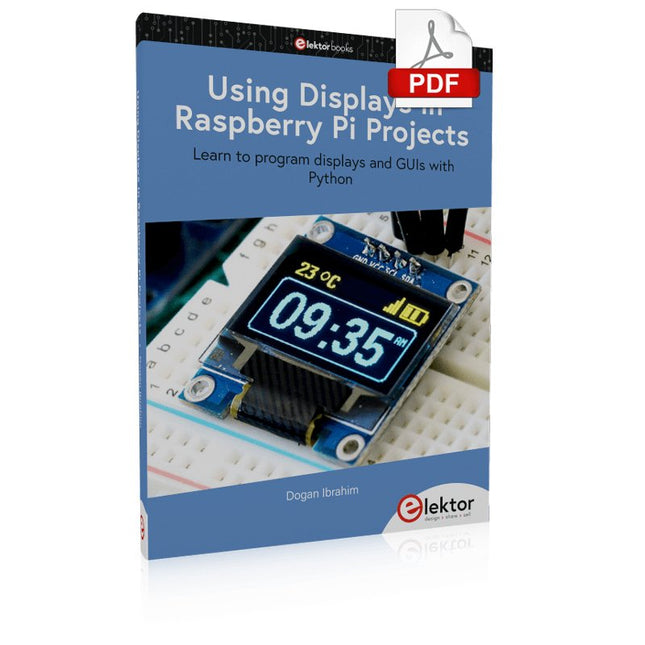
Elektor Digital Using Displays in Raspberry Pi Projects (E-book)
Learn to program displays and GUIs with Python This book is about Raspberry Pi 4 display projects. The book starts by explaining how to install the latest Raspbian operating system on an SD card, and how to configure and use the GPIO ports. The core of the book explains the following topics in simple terms with fully tested and working example projects: Simple LED projects Bar graph LED projects Matrix LED projects Bitmap LED projects LED strips LCDs OLED displays E-paper displays TFT displays 7-inch touch screen GUI Programming with Tkinder One unique feature of this book is that it covers almost all types of display that readers will need to use in their Raspberry Pi based projects. The operation of each project is fully given, including block diagrams, circuit diagrams, and commented full program listings. It is therefore an easy task to convert the given projects to run on other popular platforms, such as Arduino or PIC microcontrollers. Python program listings of all Raspberry Pi projects developed in this book are available for download at Elektor.com. Readers can use these programs in their projects. Alternatively, they can modify the programs to suit their applications.
€ 32,95
Mitglieder: € 29,66
-

Raspberry Pi Foundation FPC Display-Kabel für Raspberry Pi 5 (500 mm)
Der Raspberry Pi 5 verfügt über zwei vierspurige MIPI-Anschlüsse, von denen jeder entweder eine Kamera oder ein Display unterstützen kann. Diese Anschlüsse verwenden dasselbe 22-polige "Mini"-FPC-Format mit 0,5 mm Raster wie das Compute Module Development Kit und erfordern Adapterkabel für den Anschluss an die 15-poligen "Standard"-Anschlüsse mit 1 mm Raster an aktuellen Raspberry Pi Kamera- und Display-Produkten. Diese Mini-zu-Standard-Adapterkabel für Kameras und Displays (beachten Sie, dass ein Kamerakabel nicht mit einem Display verwendet werden sollte und umgekehrt) sind in den Längen 200 mm, 300 mm und 500 mm erhältlich.
€ 3,95€ 1,58Bestpreis
-

Raspberry Pi Foundation FPC Display-Kabel für Raspberry Pi 5 (300 mm)
Der Raspberry Pi 5 verfügt über zwei vierspurige MIPI-Anschlüsse, von denen jeder entweder eine Kamera oder ein Display unterstützen kann. Diese Anschlüsse verwenden dasselbe 22-polige "Mini"-FPC-Format mit 0,5 mm Raster wie das Compute Module Development Kit und erfordern Adapterkabel für den Anschluss an die 15-poligen "Standard"-Anschlüsse mit 1 mm Raster an aktuellen Raspberry Pi Kamera- und Display-Produkten. Diese Mini-zu-Standard-Adapterkabel für Kameras und Displays (beachten Sie, dass ein Kamerakabel nicht mit einem Display verwendet werden sollte und umgekehrt) sind in den Längen 200 mm, 300 mm und 500 mm erhältlich.
€ 2,95€ 1,18Bestpreis
-
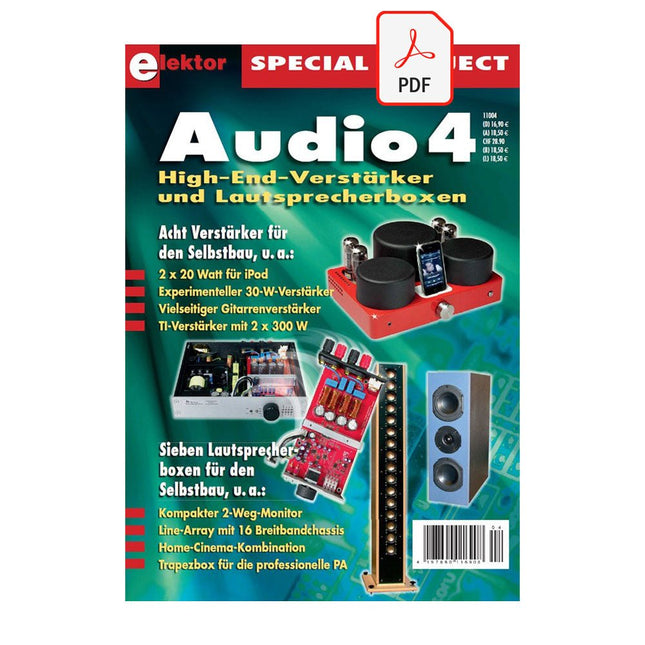
Elektor Digital Audio 4 (PDF)
Inhalt Röhrentechnik iPod-Röhrenverstärker Opus 2: Hybrid-Technik mit Silizium-Vorstufe Single Ended mit 2x 2 Watt: Minimalistisches Design mit Triode Der General II: Eine 300B-Version mit interner Trafo-Kopplung Experimenteller 30-W-Röhrenverstärker: Ein Entwurf – viele Varianten Vielseitiger Gitarrenverstärker: Röhrenbestückte Klangmaschine Hybrider Leistungsverstärker: Ultralinearschaltung mit EL34 und Operationsverstärker Crownstone Tubecharger: Gitarrenverstärker im Retro-Design Lautsprecher Pipeline: Das ganz spezielle Line Array Nescio: Aktiv mit Hypex-DSP Synchron Center und Rear: MTM-Design für die Home-Cinema-Fraktion und der passende kleine Bruder dazu 261-PA: Zwei 6-Zöller plus Kalotte und HiFi-Abstimmung Tura: Mission mal unübersehbar anders Quintett: Edles von Visaton mit sechsfacher Bestückung Halbleitertechnik Entstörung von Röhrenverstärkern: Die Tipps gegen Brummen, Knistern und Rauschen 600 Watt Pure Path: Kompletter Verstärker mit dem ganz besonderen Chip von Texas Instruments
€ 16,90
Mitglieder: € 15,21
-

Elektor Digital Röhren 4 (PDF)
Aus dem Inhalt Kompakter High-End-Vollverstärker mit PCL 86 Schaltungen mit der neuen Röhre EL 84 T als echte Triode UKW Stereo-Empfänger in Hybrid-Technik Frequenzanzeige für UKW-Tuner mit Nixie-Röhren Kompaktes Labornetzteil zur Entwicklung von Röhrenschaltungen Symmetrix – Vollsymmetrische Endstufe für hochwertigen Hifi- und Studioeinsatz Hybridendstufe Röhrenkennlinien aufnehmen mit dem PC Röhrenvoltmeter
€ 15,90
Mitglieder: € 14,31
-
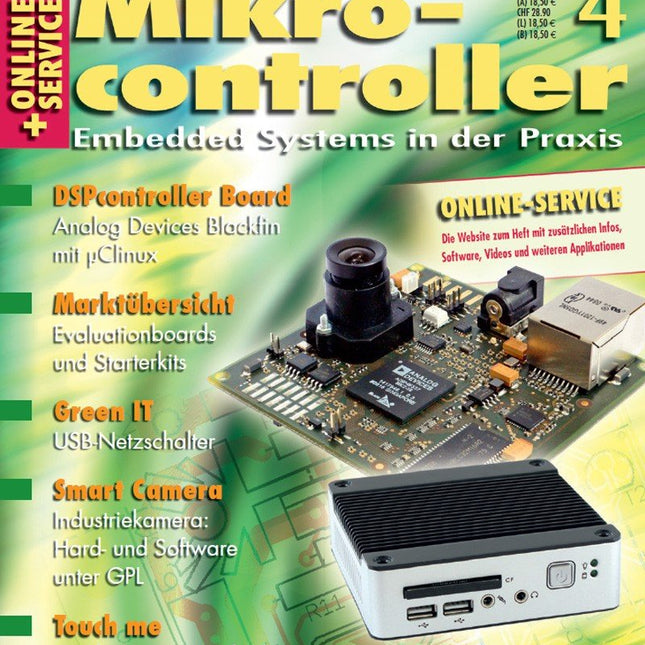
Elektor Digital Mikrocontroller 4 (PDF)
Praxis Mehr RFID – Ein RFID-System aus Standardkomponenten; nicht nur zum Identifizieren Sparpumpe – Umbau einer ECM- zur Systempumpe Operation am offenen Herzen – Programmierung des Mikrocontrollers im Lego-Mindstorms HaiTech – BF537LANcore: Mini-DSP-Modul mit Blackfin-DSP und Xilinx-FPGA ON/OFF – USB-Lineswitch Media-Cube – Aufbau eines kleinen Media-PCs zum Surfen, für das Heimkino und als Web-Radio Info Volks-Cam – Open-Source Smart-Kamera All Inclusive – 8051- und ARM-Cortex-M3-Chips mit programmierbaren Analogfunktionen Kerngeschäft – Marktübersicht preiswerter Evaluierungs-Boards für Mikrocontroller mit ARM-Cortex-M3-Kern Alles auf eine Karte gesetzt – EasyPIC 6 Entwicklungssystem von Mikroelektronika Sliden und Gliden – Berührungssensitive Bedienelemente integrieren Weitere Hefte aus dieser Reihe: Mikrocontroller 7 (PDF) Mikrocontroller 6 (PDF) Mikrocontroller 5 (PDF) Mikrocontroller 3 (PDF) Mikrocontroller 2 (PDF) Mikrocontroller 1 (PDF)
€ 16,90
Mitglieder: € 15,21
-
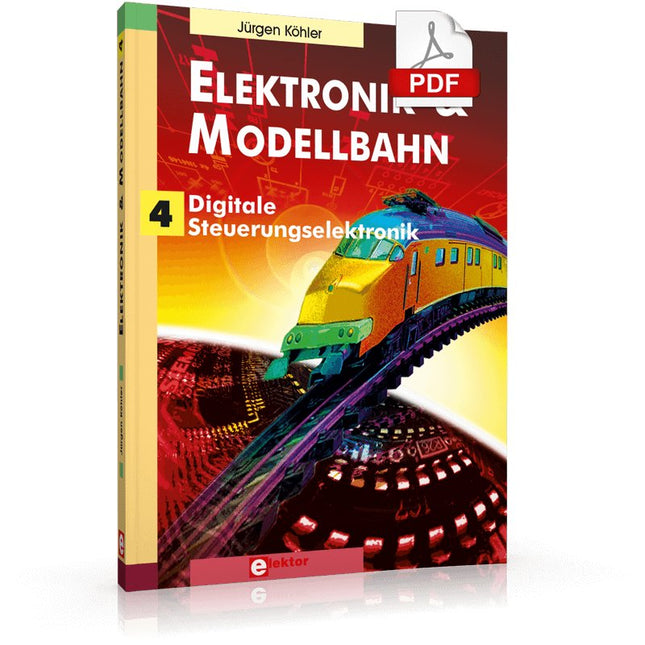
Elektor Digital Elektronik & Modellbahn 4 (E-book)
Der Traum eines jeden Modelleisenbahners ist es, seine Anlage möglichst dem großen Vorbild getreu aufzubauen und zu steuern. Entsprechend dem heutigen Stand der Technik wird hierzu die Elektronik mit ihrer gesamten Bandbreite eingesetzt: vom passiven Bauelement über das aktive, der integrierten Schaltung bis hin zum PC. Dabei passiert es leider manchem Modelleisenbahner, dass er den Anschluss verpasst, weil er keinen Zugang hat zu der modernen Technik und der damit verbundenen Elektronik.Die vierteilige Buchreihe Elektronik & Modellbahn schafft Abhilfe und bringt die Elektronik dem Modelleisenbahner näher. Jeder hat die Möglichkeit, gemäß seinem Wissensstand in die Technik einzusteigen.Buch 4 schließlich befasst sich mit der aktuell modernsten Modellbahntechnik; der digitalen Steuerung im Motorola-Format.Weitere Bücher aus dieser Reihe: Elektronik & Modellbahn 1 (PDF) Elektronik & Modellbahn 2 (PDF) Elektronik & Modellbahn 3 (PDF)
€ 29,80
Mitglieder: € 26,82


-
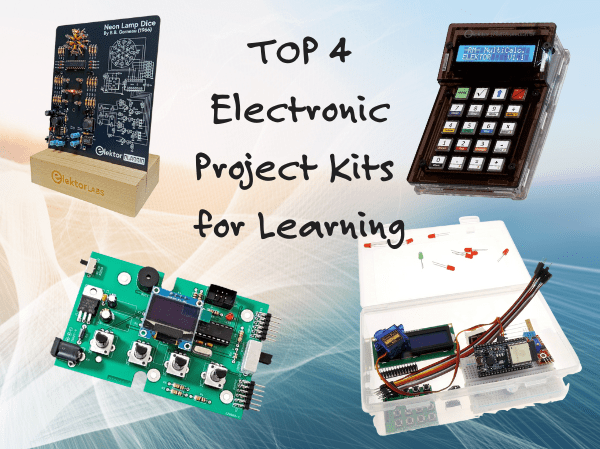
, von Udo Bormann Die 4 besten Elektor-Elektronik-Projektbaukästen zum Lernen und Entwickeln von Fertigkeiten
Entdecken Sie vier der spannendsten Elektronikbausätze von Elektor - von IoT und Arduino bis hin zu Retro-Logik und Bewegungssteuerung. Egal, ob Sie gerade erst anfangen...
